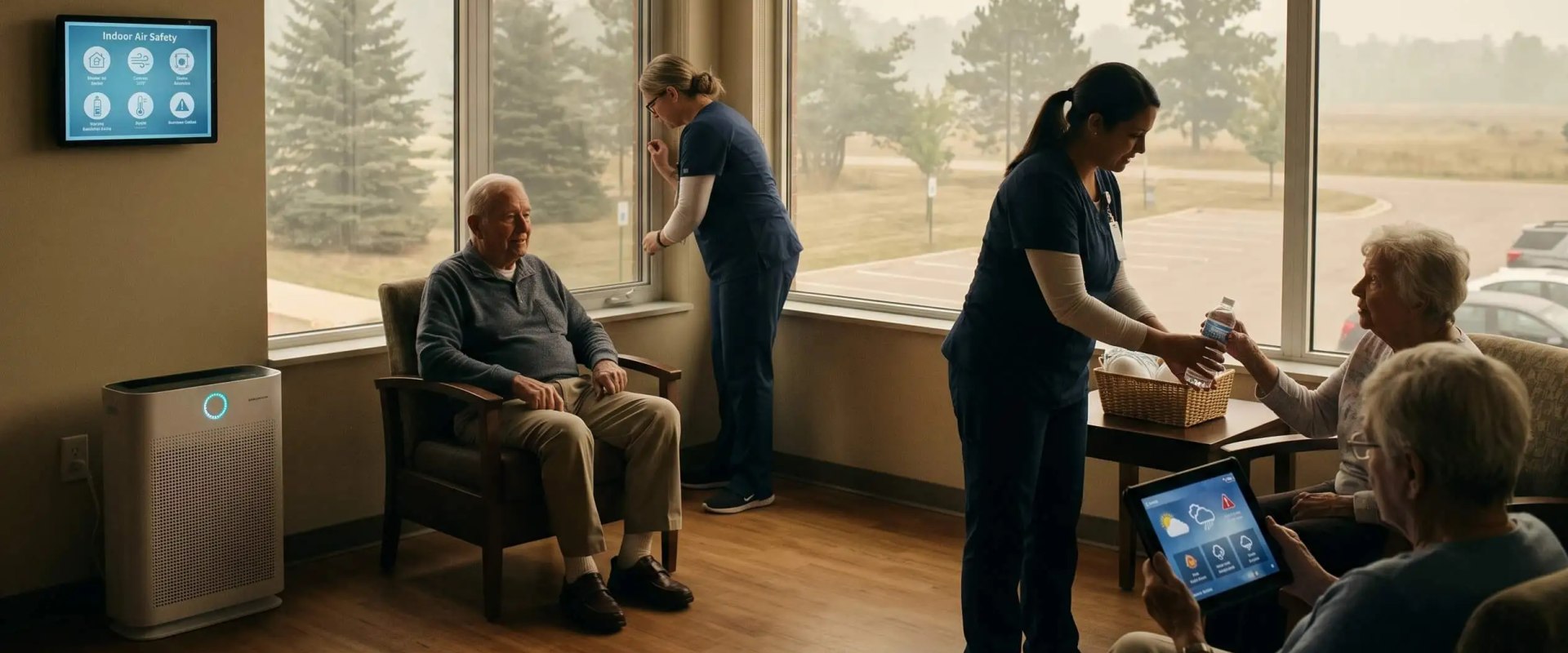
Don't take your indoor air for granted. Wildfire smoke in Michigan slips indoors through gaps most families never see, and older residents feel it first. When I compared the state's alerts with federal health guidance, I found that most of the fixes sit in the building's hands.
TL;DR Quick Answers
wildfire smoke Michigan
Wildfire smoke in Michigan drifts in from boreal forest fires in Ontario, Quebec, and Manitoba. In 2026 it triggered statewide EGLE alerts in July and an Upper Peninsula alert on October 12. Sensitive groups, including older adults, should move indoors at AQI 101, close windows, and filter the air.
Check conditions daily: Use EGLE’s MiAir readings, the AirNow Fire and Smoke Map, and EnviroFlash alerts set to your ZIP code.
Act at orange: Once the AQI hits 101, sensitive groups stay inside with windows shut and systems set to recirculate.
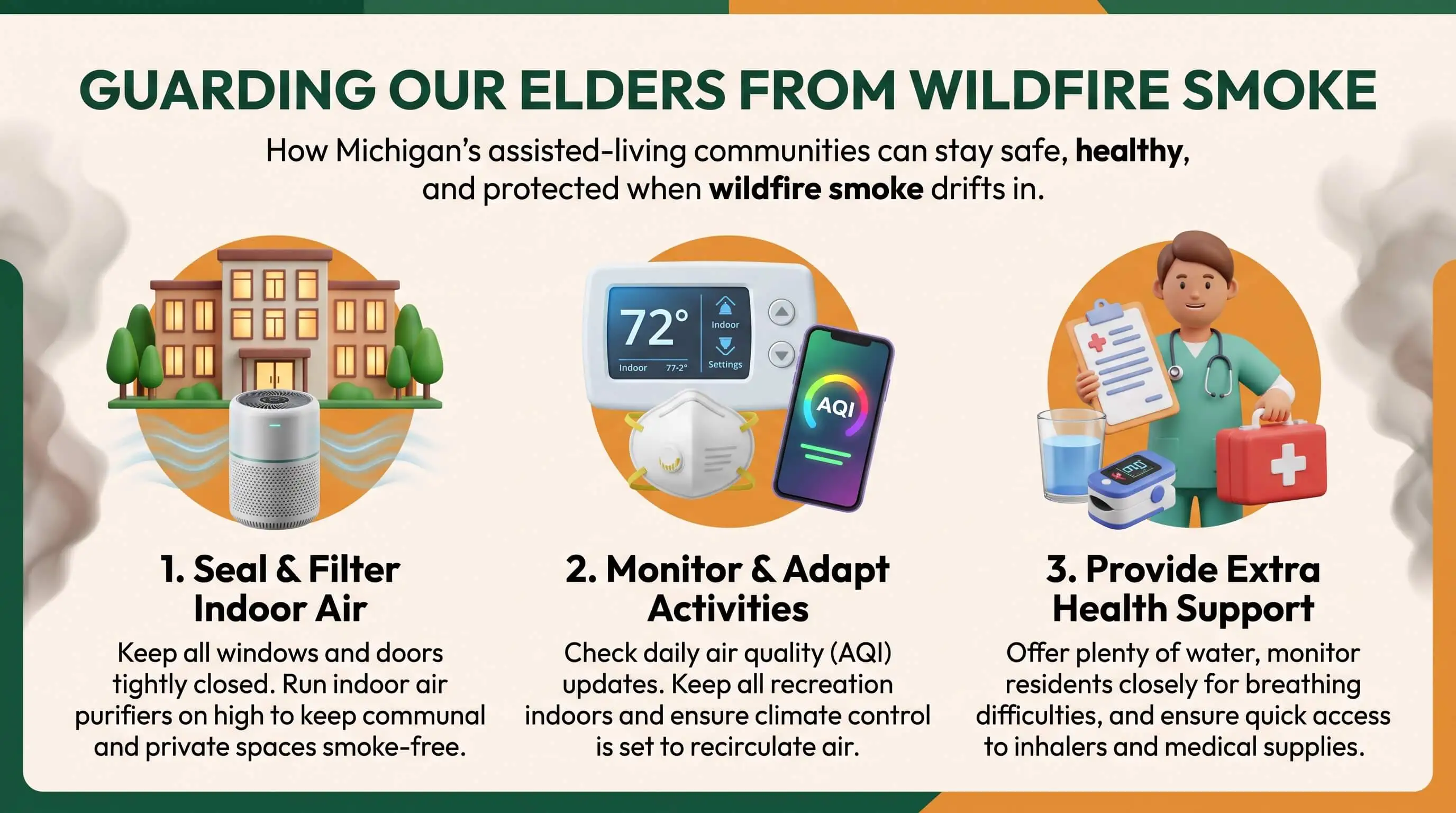
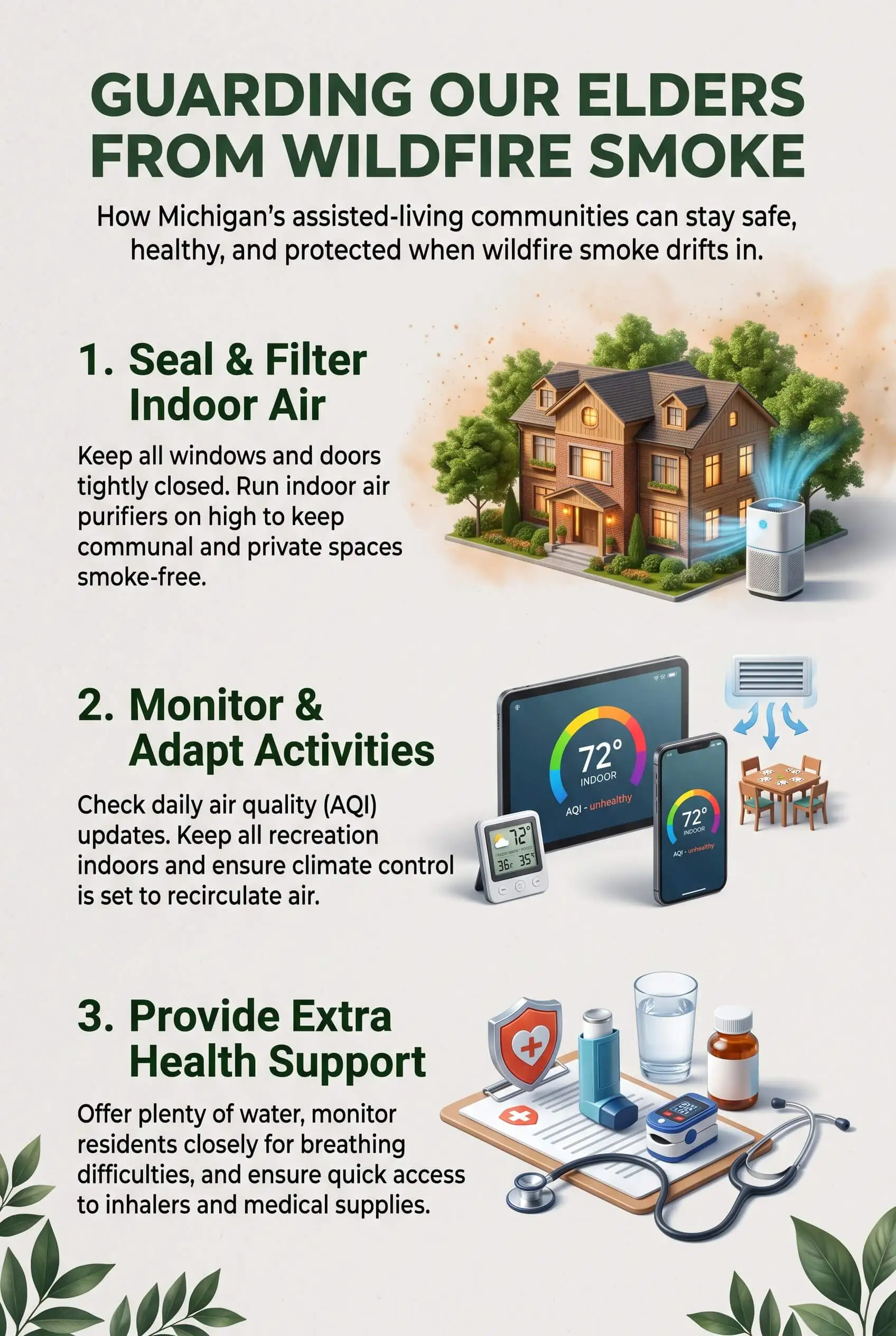
Filter the air: Run a MERV 8 filter, or the highest rating your system can handle, with the fan set to ON instead of AUTO.
Close the hidden leaks: Shut fresh-air vents on room units and limit exhaust fans, since both pull smoke in past the central filter.
Plan past summer: The October 12 alert showed Michigan’s smoke season can stretch well into fall.
Top Takeaways
Smoke reaches Michigan often. Canadian and Upper Midwest fires sent smoke across the state in July and again in October 2026.
Residents should act orange. Older adults count as a sensitive group, so indoor steps start at AQI 101.
MERV 13 sets the filtration baseline. Use it, or the highest rating the system can handle, with the fan set to ON.
Room units hide the biggest leak. An open PTAC fresh-air vent can pull smoke right past the central filter.
Families keep preparation on the radar. Asking about filters, vents, and disaster plans tells a facility someone is paying attention.
Why Wildfire Smoke Hits Assisted-Living Residents Harder
Smoke affects everyone who breathes it, but an older body has less room to absorb the hit. PM2.5 does the damage. These particles measure 2.5 micrometers or smaller, roughly 30 times thinner than a human hair, so they slip past the nose and throat and lodge deep in the lungs.
The CDC names asthma, COPD, diabetes, chronic kidney disease, and heart disease as conditions that raise smoke risk. Many residents live with more than one. Watch for coughing, wheezing, chest pain, a racing heartbeat, or tiredness that seems out of character. It's also important to test indoor air quality during wildfire smoke events to help identify harmful particle levels inside your home.
How Smoke Reaches Michigan
High-altitude winds carry smoke from boreal forest fires in Ontario, Quebec, and Manitoba across the Great Lakes. The Michigan Department of Environment, Great Lakes, and Energy, known as EGLE, issued statewide smoke alerts through mid-July 2026. On October 12, EGLE put Baraga, Marquette, Iron, Dickinson, and Menominee counties under an air quality alert. Summer's end doesn't close the season anymore.
What Michigan Licensing Requires for Emergencies
Here's something that might surprise you: plenty of Michigan communities that call themselves assisted living hold a state license as a home for the aged or an adult foster care home. The Department of Licensing and Regulatory Affairs, or LARA, oversees both. The state licensing rules for homes for the aged require a written disaster plan for fire, loss of heat, power, or water, and any other emergency, and each home has to train its staff to carry that plan out.
Filters only work while fans run, so backup power matters. Michigan Public Act 397 of 2004 requires any home for the aged applying for a license or renewal to have an emergency generator, and older homes keep an exemption until they undergo a major building modification. Ask to see the disaster plan, and check whether it mentions wildfire smoke by name.
Track Smoke Before It Reaches the Building
Residents in a sensitive group need to act sooner than the general public, and the Air Quality Index, or AQI, tells staff and families exactly when. Sign up for EnviroFlash alerts by ZIP code and check EGLE's MiAir readings each morning. This ladder works well:
Yellow, AQI 51 to 100: Count spare filters, confirm the clean air room is ready, and move outdoor time to early morning.
Orange, AQI 101 to 150: Bring residents inside, shut the windows, and switch systems to recirculate.
Red, AQI 151 to 200: Shift activities into the clean air room and check every resident for symptoms each shift.
Purple or maroon, AQI 201 and up: Keep residents in filtered rooms all day and tell clinicians about anyone with heart or lung disease.
Building Steps That Keep Smoke Out
Run Central Air Through a MERV 13 Filter
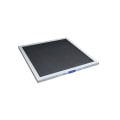
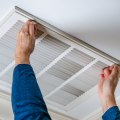
During smoke events, the EPA recommends a MERV 13 filter or the highest rating your system's fan and filter slot can handle. Seat it snugly in the slot. Flip the thermostat fan from AUTO to ON so air keeps moving through it, and pull the filter for a look every few days while smoke hangs around. If the numbers feel confusing, this guide to reading the MERV ratings chart walks through them.
Close Fresh-Air Vents on Room Units
Look under the window in many senior apartments and you'll find a PTAC, the through-the-wall unit that heats and cools a single room. Most have a fresh-air setting. Left open, it pulls smoke straight into a resident's room and skips the central filter entirely. Close those vents first. Then ask a qualified technician how far to cut outdoor air from ventilators and corridor make-up air units, since every building needs some ventilation.
Seal the Leaks Smoke Uses
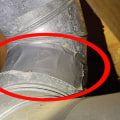
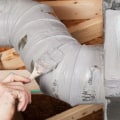
Smoke finds every gap. Keep vestibule doors shut, check door sweeps, and hold off on exhaust fans that draw outdoor air through cracks. Leaky return ducts in an attic or crawlspace can pull unfiltered air right into the system, which is one more reason sealing air ducts improves indoor air quality along with efficiency.
Pro Tip: Before smoke season, list every PTAC vent lever, exhaust fan switch, and door people like to prop open. On alert days, staff can work down that list in minutes.
Set Up a Clean Air Room for Residents
The EPA suggests turning one room big enough for everyone into a clean air room, with windows and doors closed and a portable air cleaner that doesn't produce ozone.
Choose commercial units with a published clean air delivery rate, or CADR. Their combined smoke CADR should equal at least two-thirds of the room's square footage, so a 600-square-foot activity room needs about 400. Look for units with high quality filters designed to capture fine smoke particles. Residents with COPD or heart disease benefit from a small unit in their own room overnight.
Daily Care Adjustments on Smoke Days
Move activities inside: Trade walks for chair exercise, music, or card games in the clean air room.
Push back routine trips: Postpone non-urgent outings once the AQI hits orange. Urgent medical care never waits.
Watch for changes: Report new coughing, wheezing, chest discomfort, or unusual fatigue to the nurse right away.
Plan for heat: Keep residents hydrated and cool with recirculated air rather than open windows.
Follow the care team: Changes to oxygen, inhalers, or medication come from the resident's clinician. An N95 can help outdoors, though anyone with heart or lung disease should check with a doctor first.
Questions to Ask Your Loved One's Facility
You can be the hero of your household here, even from across town. Take these questions to the next care conference:
What MERV rating do your filters carry, and how often do you change them during smoke events?
Who closes the fresh-air vents on room units when an alert goes out?
Which room serves as the clean air room, and how many portable air cleaners do you have?
How do staff get air quality alerts, and who checks them each morning?
Does your disaster plan cover wildfire smoke specifically?
Will the generator keep air handlers and air cleaners running during an outage?
How will you let families know when residents move indoors or show symptoms?
"After years of servicing HVAC systems in Michigan senior living buildings, I can tell you the smoke problem rarely starts at the main filter. It usually starts with a PTAC fresh-air lever someone opened back in June, and nobody closes it until a resident starts coughing."
7 Essential Resources
Live Michigan Wildfire Smoke Map: Statewide fire, smoke, and warning layers, plus ways to protect the air indoors.
MDHHS: Your Health and Wildfire Smoke: Michigan's own health guidance on smoke exposure for sensitive groups.
CDC: How Wildfire Smoke Affects Your Body: The symptoms to watch for and the conditions that raise smoke risk.
AirNow: Be Smoke Ready: Supply lists, clean air room setup, and planning help for high-risk groups.
EPA: Wildfires and Indoor Air Quality: Advice on filters, clean rooms, and portable air cleaners during smoke events.
AHCA/NCAL: Wildfire Smoke Resources for Long Term Care Providers: Federal preparedness resources gathered for nursing homes and assisted living.
ASHRAE: Wildfire Response Resources: Guideline 44-2024, which covers running healthcare and multifamily buildings through smoke events.
3 Supporting Statistics
One in five Michiganders, 20.5%, is 65 or older, according to V2025 population estimates. U.S. Census Bureau QuickFacts: Michigan
Across the United States, 77,850 wildfires burned 5,131,474 acres in 2025. National Interagency Fire Center
The 2026 State of the Air report ranks two Michigan metro areas among the nation's 25 worst for year-round particle pollution. American Lung Association
With 20.5% of Michigan's population aged 65 or older, more than 5 million acres burned by U.S. wildfires in 2025, and two Michigan metro areas ranking among the nation's worst for year-round particle pollution in 2026, protecting indoor air is increasingly important. An air quality test can help households identify harmful particle levels and take steps to reduce exposure, especially for older adults and people with existing health conditions.
Final Thoughts and Opinion
My take after working through the alerts and the guidance: smoke protection in assisted living gets decided in the quiet months, long before the sky turns orange. A spare MERV 13 filter on the shelf does more for residents than any alert. So does a staff member who knows which PTAC levers to close. If a parent or grandparent lives in a Michigan care home, ask the questions above while the air is still clear, including whether the facility uses a pleated furnace filter to help capture fine smoke particles. Five minutes at a care conference protects them all season.
Frequently Asked Questions
Is Wildfire Smoke in Michigan Dangerous for Elderly Residents?
Yes. Fine smoke particles travel deep into the lungs and can worsen heart and lung disease, which many residents already manage. As a sensitive group, older adults should head indoors once readings turn orange.
What AQI Level Is Unsafe for Seniors in Assisted Living?
Treat 101, the orange "Unhealthy for Sensitive Groups" level, as the line for keeping residents indoors with windows closed. Once readings pass 151, move activities into a clean air room and check residents for symptoms every shift.
Does a MERV 13 Filter Protect Residents From Wildfire Smoke?
A MERV 13 filter catches a meaningful share of smoke particles when it fits snugly and the fan runs continuously. It works best with room-unit fresh-air vents closed and portable air cleaners running in shared rooms.
Should Assisted-Living Residents Wear N95 Masks During Smoke Events?
A well-fitted N95 can cut exposure outdoors, but it makes breathing harder for some people with heart or lung disease. Residents should ask their doctor before wearing one.
Where Can I Check Wildfire Smoke Conditions in Michigan Today?
EGLE's MiAir readings, the AirNow Fire and Smoke Map, and a live Michigan smoke map that layers fires, plumes, and warnings all show current conditions. EnviroFlash will send alerts for any Michigan ZIP code by email or text.
Help Your Loved One Breathe Easier Through Michigan Smoke Season
Take these wildfire smoke safety tips to your next care conference and ask how the facility will protect Michigan assisted-living residents before the next alert, including whether they use furnace filters capable of capturing fine smoke particles. Keep this page saved so the checklist stays close by when the air outside starts to change.